I. La vie en beau!
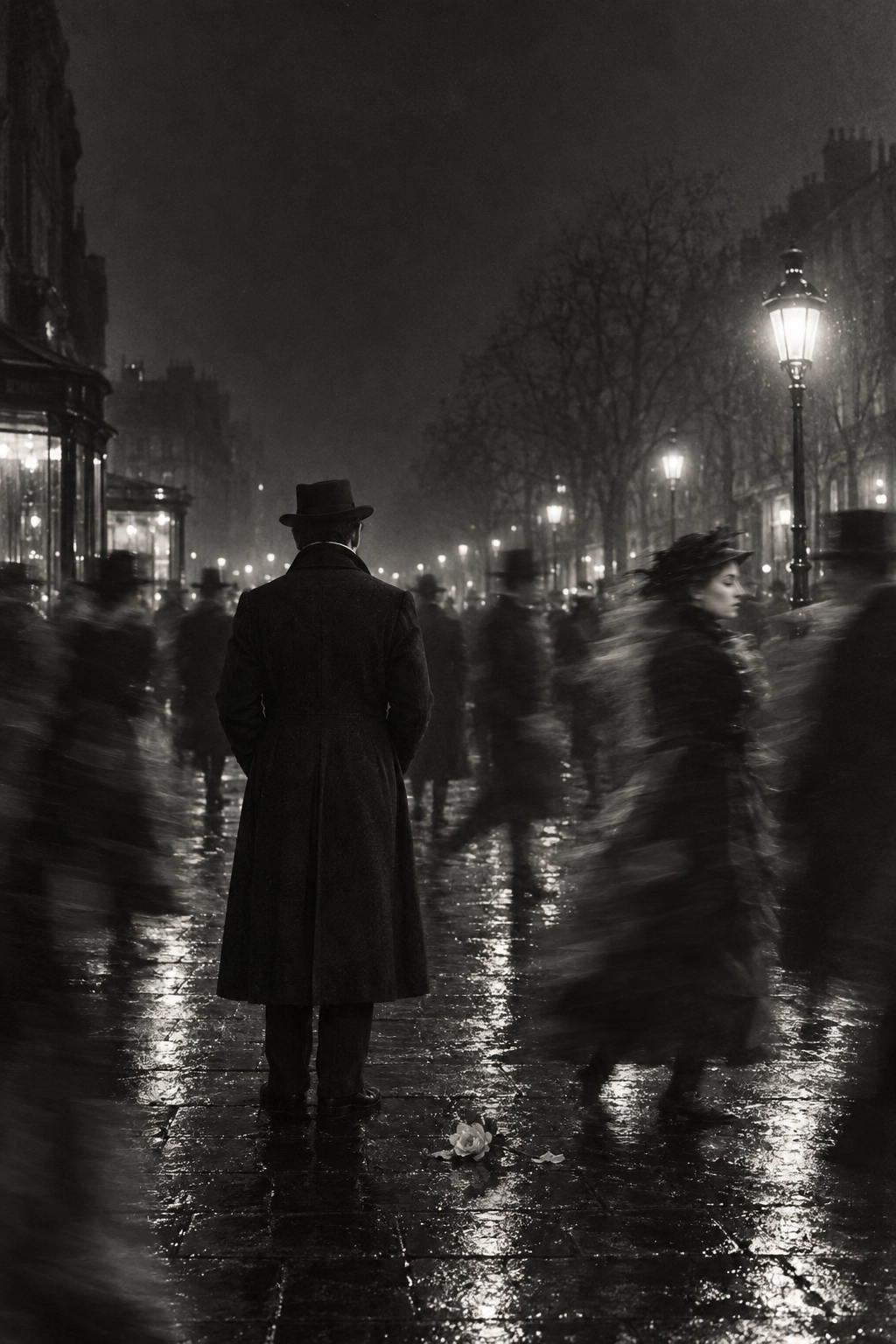
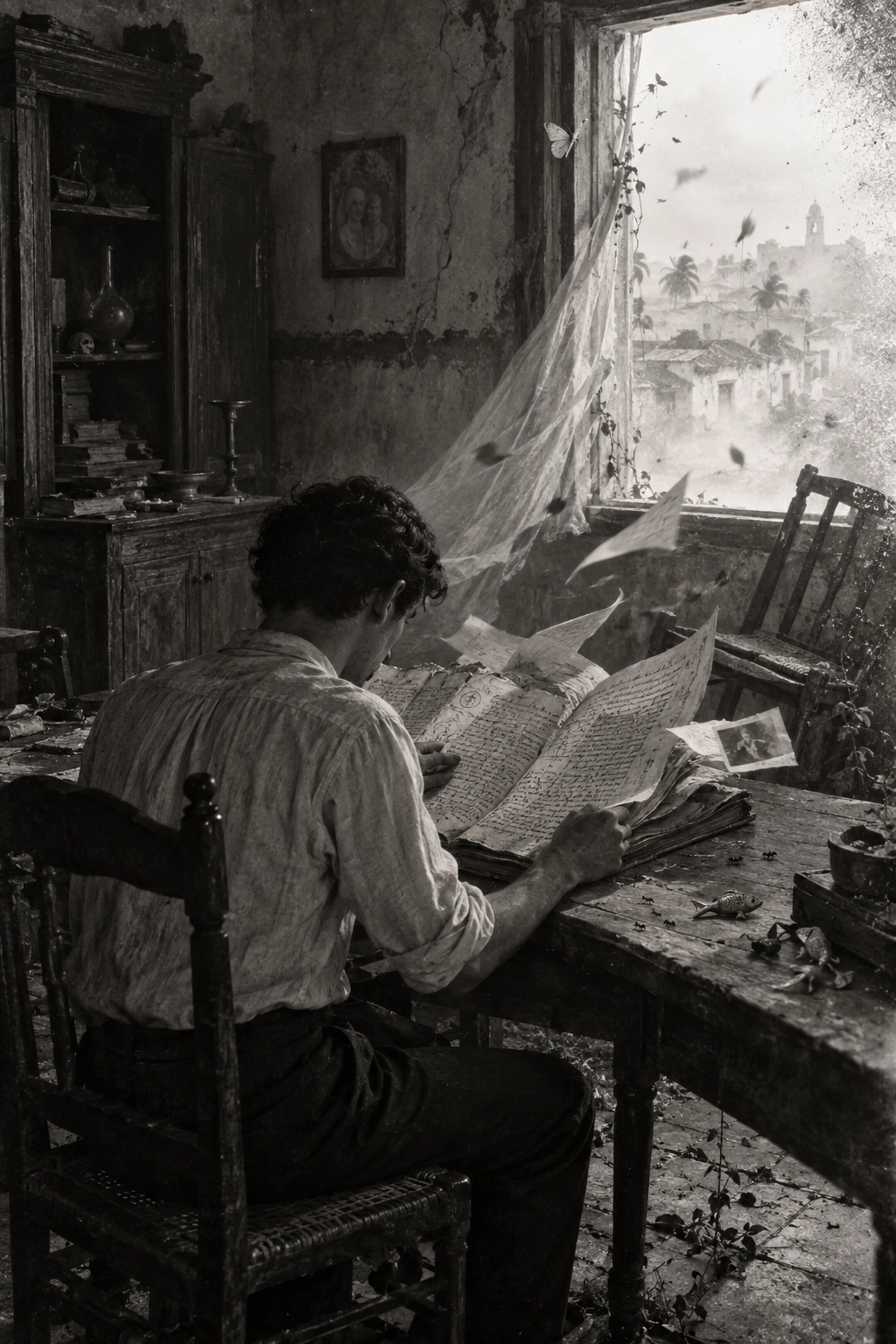
One morning a man gets out of bed “sullen, sad, tired of idleness,” pushed, as it seems to him, toward something grand, une action d’éclat, and opens his window—hélas!—on Paris. The first person he sees in the street is a glazier, and what reaches the sixth floor is the glazier’s cry, “piercing, discordant,” rising “through the heavy and dirty Parisian atmosphere.” The man at the window is seized, he says, by a hatred “as sudden as it was despotic,” and he cannot tell us why. He calls the glazier up. While he waits, he reflects, “not without some gaiety,” that the room is on the sixth floor and the staircase very narrow, and that the man must be having trouble with the climb, catching the corners of his fragile merchandise at every turn.
Up comes the glazier. The narrator examines his panes, curiously, one by one, and then speaks:
« — Comment ? vous n’avez pas de verres de couleur ? des verres roses, rouges, bleus, des vitres magiques, des vitres de paradis ? Impudent que vous êtes ! vous osez vous promener dans des quartiers pauvres, et vous n’avez pas même de vitres qui fassent voir la vie en beau ! »
(“What? You have no colored glass? No rose-colored panes, no red, no blue, no magic panes, no panes of paradise? Impudent man! You dare to walk through the poor quarters, and you haven’t even got glass that makes life look beautiful!”)
He pushes the man briskly back toward the stairs, where he stumbles, grumbling. Then he goes to his balcony, takes a small flowerpot, and when the glazier reappears in the doorway below, lets his “engine of war” fall “perpendicularly” onto the back edge of the wooden carrying frame. The shock knocks the man over, and under his own back he finishes breaking “his whole poor walking fortune,” which gives out “the bursting sound of a crystal palace split by lightning.” Drunk on his madness, the narrator shouts down at him, furiously: La vie en beau! la vie en beau! Two sentences close the piece. “These nervous pleasantries are not without danger, and one can often pay dearly for them. But what does an eternity of damnation matter to one who has found in a single second the infinity of pleasure?”¹
The prose poem is called “Le Mauvais Vitrier,” “The Bad Glazier,” and its title already speaks in the voice of the man with the flowerpot. Nothing in the text suggests that the glazier is bad at glazing. He is bad only by the measure of a customer who wanted paradise and was offered windows. The adjective is a verdict pronounced before the case is heard, and anyone who names the piece repeats it.
It appeared in the late summer of 1862 in La Presse, in a series of twenty short prose pieces that Baudelaire introduced with a dedicatory letter to Arsène Houssaye, the man of letters who was publishing them.² The letter is courteous to the point of caress. It confesses that the idea for the pieces came while its author was leafing, “for the twentieth time at least,” through Aloysius Bertrand’s Gaspard de la Nuit. It describes the dream, shared by every writer “in his days of ambition,” of “the miracle of a poetic prose, musical without rhythm and without rhyme, supple enough and jolting enough to adapt itself to the lyrical movements of the soul, to the undulations of reverie, to the jolts of consciousness,” and it traces that obsessive ideal to “the frequenting of enormous cities” and “the crossing of their innumerable relations.” Then it turns to Houssaye himself: “Have you not yourself tried to translate into a song the strident cry of the Glazier, and to express in a lyrical prose all the desolating suggestions that this cry sends up to the garrets, through the highest mists of the street?”³ Houssaye had written a prose piece called “La Chanson du vitrier,” in which the peddler’s call returns as a refrain and the narrator’s compassion carries the whole.⁴ The letter does not say what Baudelaire thought of it. It says only that he had set out to do something analogous to Bertrand, and that once at work he found himself far below his “mysterious and brilliant model,” making “something (if it can be called something) singularly different.”
Set beside that dedication, the glazier poem reads like an answer delivered in the recipient’s own pages. Houssaye made the cry sing and grieved over the singer. Baudelaire’s narrator hears the same cry and calls it discordant, discovers in himself a hatred he cannot explain, and grieves over no one. Historians of the Parisian soundscape have shown how thoroughly the old street cries had been gathered up by mid-century—transcribed, harmonized, illustrated, turned into picturesque and sentimental material—while the peddlers who uttered them were dwindling from the streets.⁵ The prose poem declines the harmonizing at its source. It will not hear the glazier’s call as music. It reports the call as noise and answers noise with noise.
That reading is sound, and it makes the text too easy to love. A satire of sentimental charity does not require a man to be knocked down, and the prose keeps its eye on the man. He “stumbled, grumbling.” The flowerpot is aimed “perpendicularly,” a draftsman’s word, at le ...