I. The Square Shaft
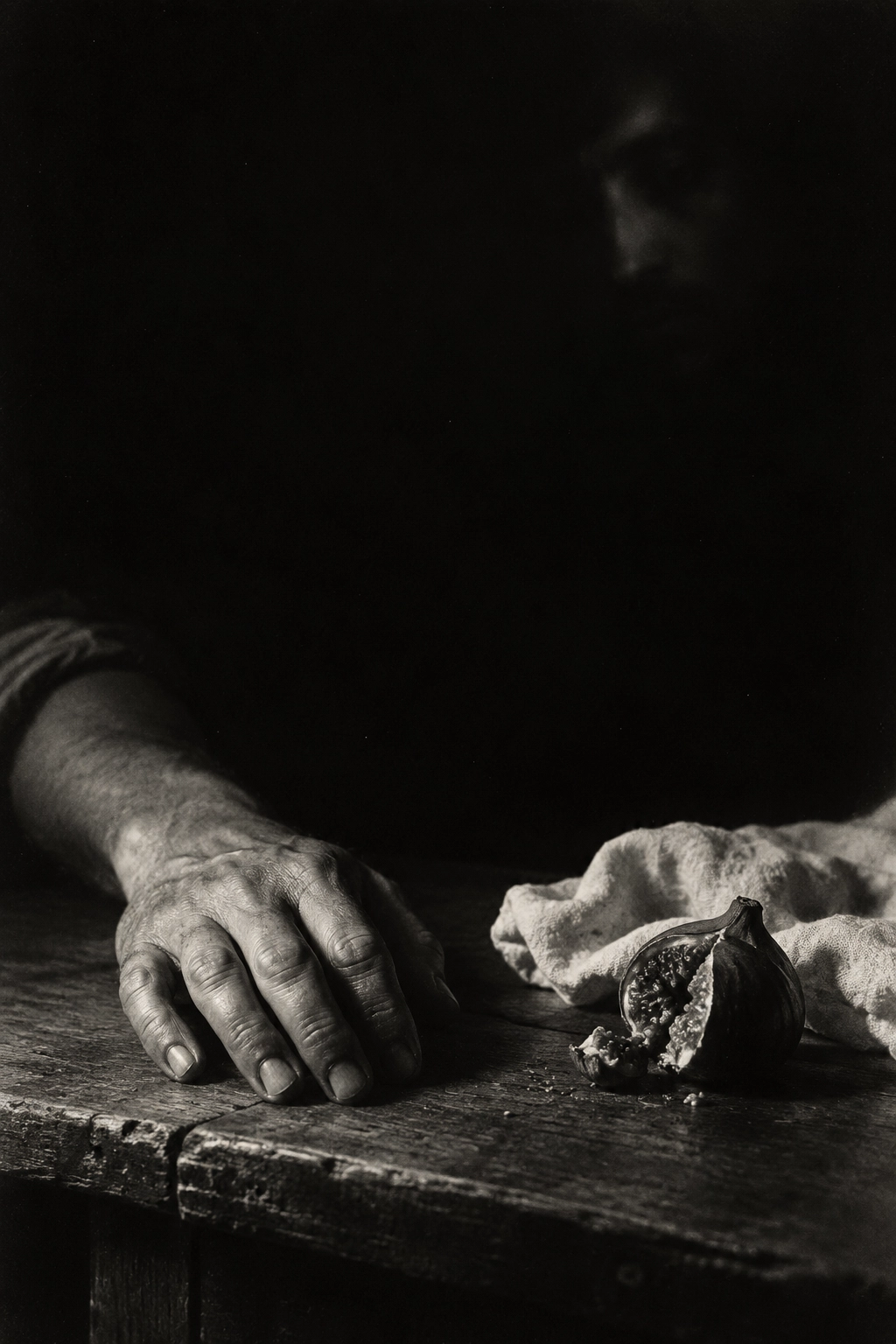
Among the professional writings Franz Kafka produced for the Workers’ Accident Insurance Institute for the Kingdom of Bohemia is a short technical argument about wood-planing machines, published in the Institute’s annual report for 1909. It is accompanied by engravings of hands. The hands are not whole. Each has been shortened by the square cutting shaft of a planing machine, that being the nature of the square shaft: it leaves a gap between the blade and the table into which a finger can slip, and the finger does not come out. The prose that surrounds these pictures is brisk, unsentimental, and entirely persuasive. It explains that a cylindrical shaft, in which the blade is set flush and the gap eliminated, costs little to retrofit and prevents the mutilation. It notes what employers say about the expense. It does not describe pain. It describes geometry, cost, and liability, and it wins the argument by describing them well.
The man who wrote that page was twenty-six years old. He had been at the Institute a little over a year. Within three years he would write, in a single night, a story in which a father sentences his son to death by drowning and the son obeys. Within five he would write a story in which an officer feeds himself to a machine that engraves sentences into the flesh of the condemned. The distance between the annual report and the fiction is not the distance between a day job and a vocation. It is the distance between two ways of accounting for the same fact, which is that bodies are damaged by systems, and that someone must decide what the damage is worth.
The insurance profession of the Habsburg lands had an answer to that question, and it was numerical. Injury was graded. A worker who lost the index finger of the right hand received a percentage of his wage; a worker who lost the hand received a larger percentage; there were schedules, appeals, classifications of risk by trade, and an entire apparatus of adjudication in which Kafka became genuinely expert. Full loss and partial loss were categories with figures attached. His fiction is, among many other things, the negative image of that apparatus: a world in which damage is exact, total, and irreversible, and no schedule exists to convert it into anything at all. Gregor Samsa’s family receives no compensation. Josef K. receives no finding. The officer of the penal colony is destroyed by the very machine whose maintenance costs he has been defending, and the destruction is bungled.
This is the first thing to establish about Kafka, because almost everything commonly said about him gets the relationship backward. He is not a clerk who dreamed nightmares of bureaucracy. He was a skilled institutional lawyer with detailed knowledge of quarries, textile mills, toy factories, and agricultural machinery, who understood exactly how modern administration works, which is to say slowly, partially, with good intentions distributed unevenly through a hierarchy that no single person controls. The terror in his fiction does not come from ignorance of institutions. It comes from expertise.
There is a second thing, harder to hold in the mind at the same time, and the two together form the pressure under which this essay is written. The body of work that made Kafkaesque an adjective in something like forty languages was, in its author’s explicit instruction, to be gathered up and burned unread. Two notes survive to that effect, both addressed to Max Brod, one written in the fall or winter of 1921 and one dated November 22, 1922; they are now in the Max Brod Archive at the National Library of Israel, where they are catalogued, with a bluntness Kafka might have enjoyed, as his testaments. The second note is the more interesting, because it is not a blanket condemnation. It concedes that a handful of printed things may stand: The Judgment, The Stoker, The Metamorphosis, In the Penal Colony, A Country Doctor, and the story “A Hunger Artist.” Everything else — the diaries, the manuscripts, the letters his own and other people’s, the drawings, the three unfinished novels — was to be destroyed without being read. The instruction was disobeyed. Because it was disobeyed, we possess The Trial and The Castle; because it was disobeyed, we possess the diaries in which a young man records his loathing of his own body and his inability to sleep. We inherited the work by breaking faith with the author.
Neither of these facts can be resolved into the other, and this essay will not try. The writer who knew precisely how compensation is calculated wrote fiction in which nothing is ever compensated; the writer who wished his papers annihilated became the name for a condition of modern life that his papers, read carefully, mostly refuse to illustrate. What follows moves through a life of forty years and eleven months, and through a body of work that is smaller than its reputation and stranger than its reputation, with the aim of keeping both contradictions in view. Kafka is more available to us than almost any other major writer — hundreds of letters, thousands of diary pages, office files, medical records, testimony from a dozen intimates — and yet the more of it one reads, the less securely it resolves into a portrait. That, too, ...